From lab to line: six months to a humanoid factory
/ 5 min readThe hall covers 10,000 square meters and is quieter than a plant this size suggests. There is space between the workstations, and each step of the build has one of its own, with people working on a different part of the robot at each. At the far end, finished units stand in a row, ready to ship.
Humanoid robots now leave this hall every working day. Six months before production started, the hall was empty.
Why Fürstenfeldbruck
We did not start out building humanoids. More than 20,000 of our automation solutions are deployed worldwide, and our German robot production has run for years in Kaufbeuren, about 90 kilometers southwest of Munich, where we build robot arms and cobots.
Humanoids need a production setup of their own. They are far bigger than a robot arm, they have many more parts, and they were planned in volumes that Kaufbeuren could not absorb alongside its existing production.
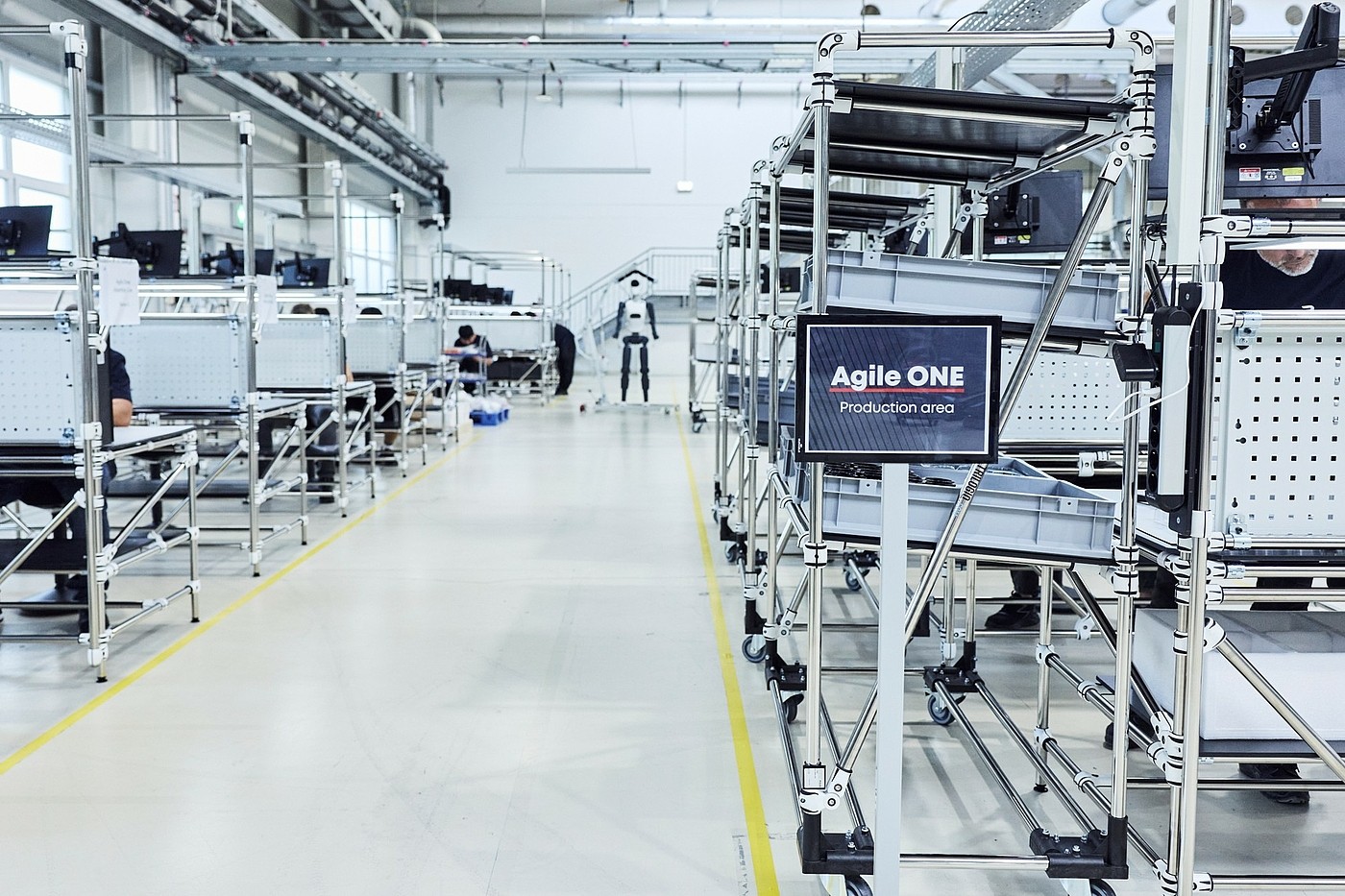
We therefore looked for a second German site and chose Fürstenfeldbruck, 25 kilometers from our Munich headquarters and research labs. That proximity shortens the path from development to production. Engineers can be next to the people assembling newly developed components within half an hour, which matters while a product is still changing as it enters production.
Producing our robots in-house was an early strategic decision. Many hardware companies hand production to contract manufacturers and concentrate on design. We design and make our robots ourselves. This keeps quality and the production process under our control and gives us direct access to real production data.
“Large volumes of high quality data are how we get Physical AI products from the lab to the line as quickly as possible,” says Dr. Zhaopeng Chen, our CEO and founder.
Production began in January, and by late summer the line had entered series production. In between, the hall had to be fitted out, the stations tooled, suppliers qualified, and people hired and trained for a robot that had not yet reached its final form. These steps could not wait for one another. The factory, the product and the production process all had to take shape at the same time.
How a humanoid gets built
Fürstenfeldbruck runs two types of production line at once, and walking the floor you pass between them.
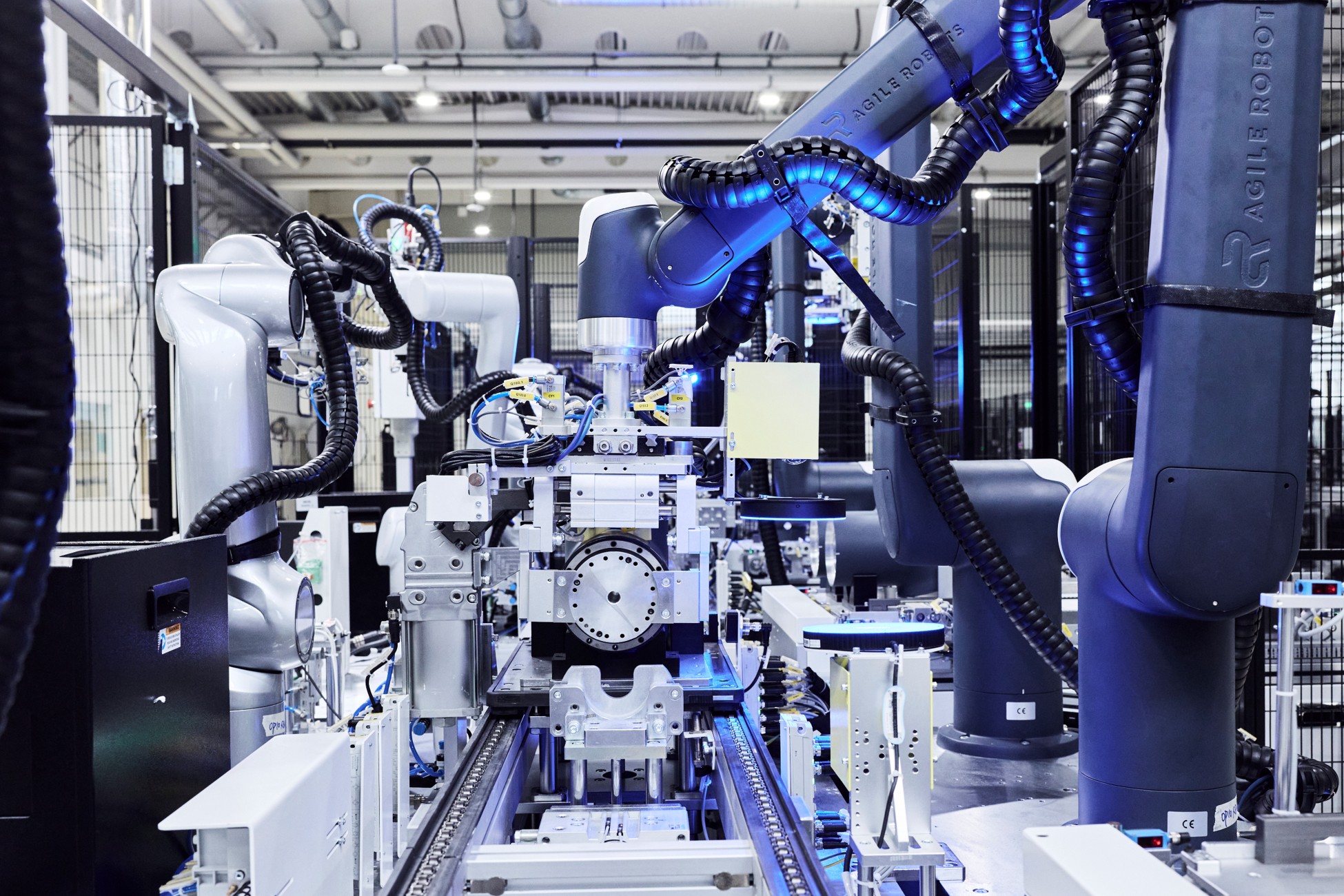
The lines that build the arms and the torsos are fully automated. The work repeats, the tolerances are tight, and a machine holds a position more reliably than a person can. Testing is automated too. Mobile robots move the material in between, picking up parts of different shapes and weights without conveyors or pre-mapped routes. Almost nothing is bolted to the floor, so stations can be shifted as the line matures. On a production that is still ramping, that flexibility is worth more than top speed.
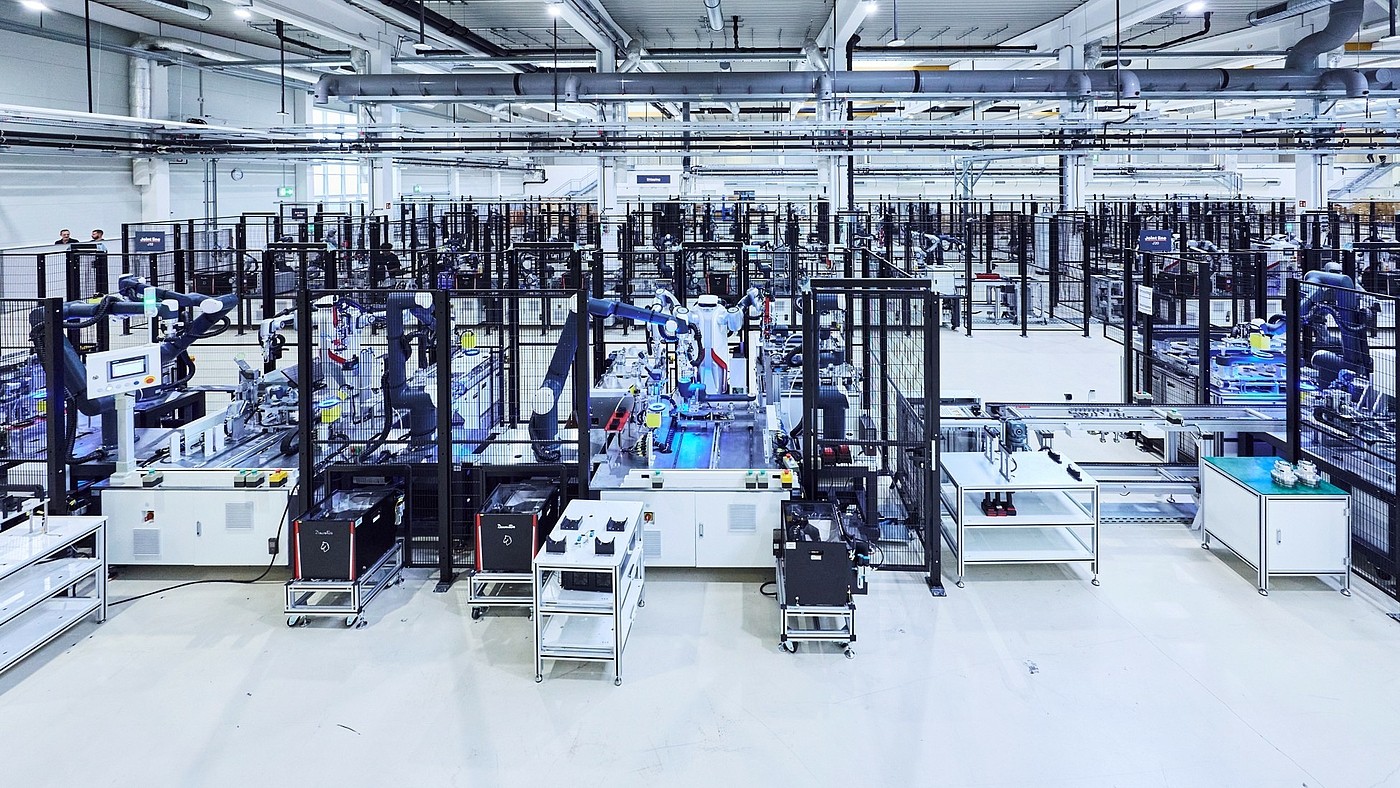
Then the scale changes. The automated lines work on torsos and arms, parts you do not lift on your own. A few meters further on, the work gets small enough to hold. This is where our dexterous Agile Hand is built.
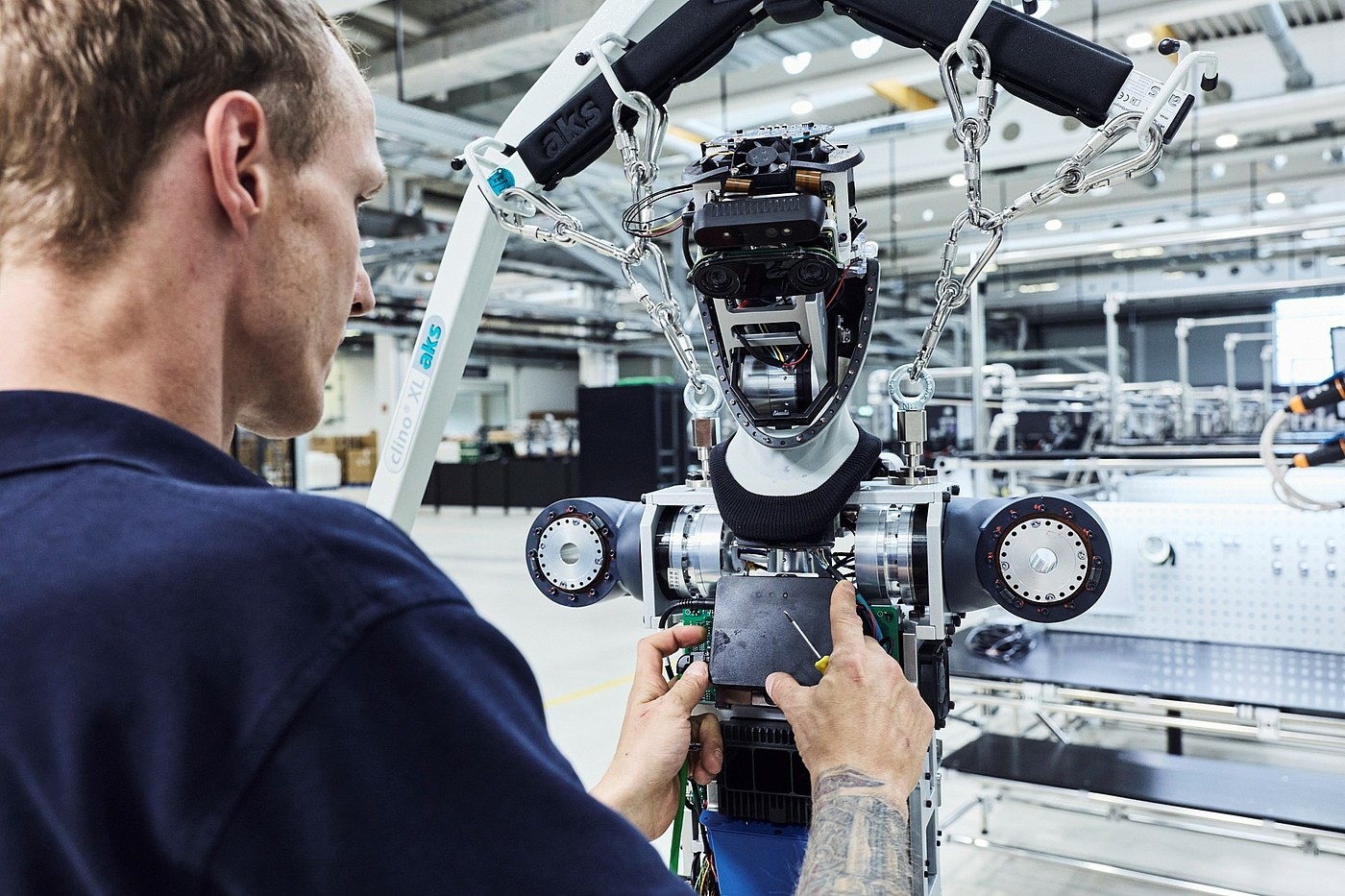
A technician works on one hand at a time, seating the sensors that go into each fingertip. Final assembly is done by people too. Those are the two hardest jobs in the building.
There is a reason those two jobs stay with people. The Agile Hand and the force and torque sensor in every joint are our own developments. No supplier sells these parts, which means nobody outside our own plants has ever assembled them. A whole robot takes three to four days to travel the plant from first station to finished unit.
The hall builds both legged and wheeled machines and most of what ships today rolls. That is a regulatory decision as much as a technical one. No framework yet exists in Europe or North America for bipedal humanoids working alongside people, and no standards exist to certify them against. The wheeled platforms already carry their certification, so they can go into a customer's plant now instead of waiting for the rules to be written.
Mobile robots on the production floor
The mobile robots carrying parts across the floor were built on site. They move material between the stations where the next ones are being assembled. While they do it, every trip is recorded, and that data will make their successors better at the job.
This creates a direct feedback loop between product development and production. The robots support the factory, while the experience and data gathered on the floor help improve the systems that follow. In Fürstenfeldbruck, robots are built and put to work in the same place.